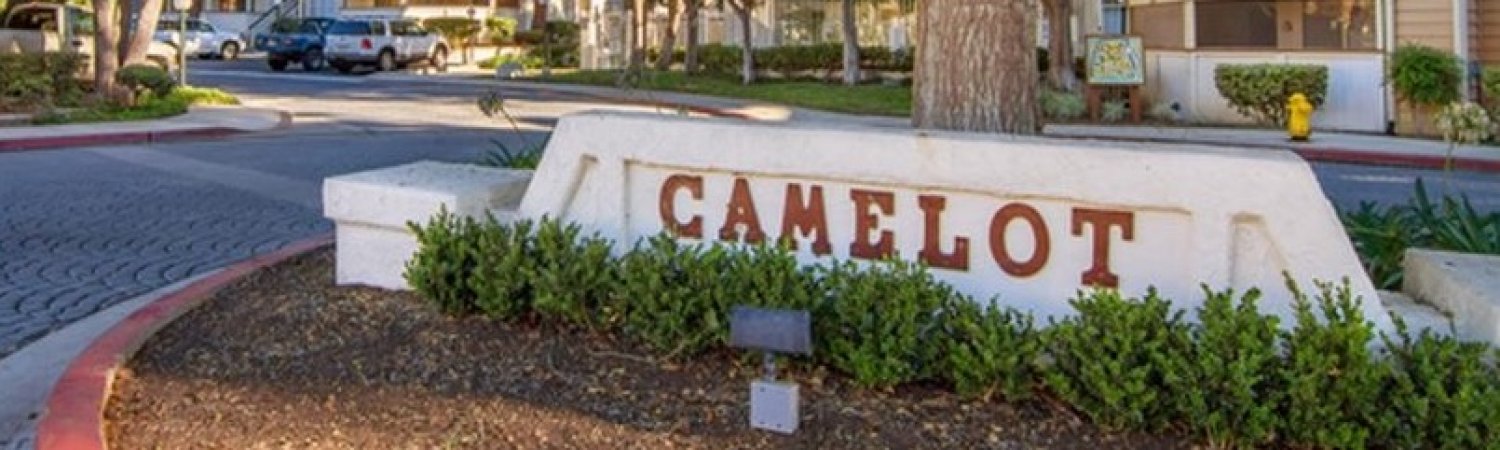
Camelot History
The land on which Camelot is built was where many of the exotic animals that were used in motion pictures were housed when they were "on hiatus." The area from the Thousand Oaks Civic Center/City Hall to Camelot Condos was once an amusement park of sorts called "Jungleland."
All this leads to a piece of fun trivia that some longtime Thousand Oaks residents swear by: Camelot was not named after the medieval kingdom or the stage and film production. No, those "in the know" like to say the name stands for exactly that, the lot on which some camels were housed. Camel-lot.
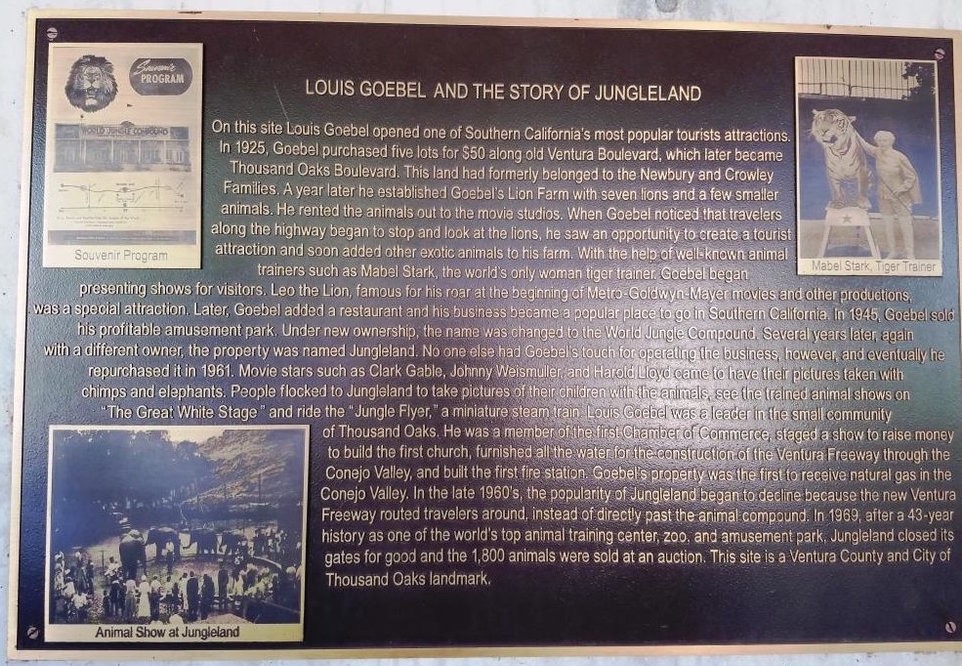
This plaque, mounted on the grounds of the Civic Arts Center, relates the colorful history of the area
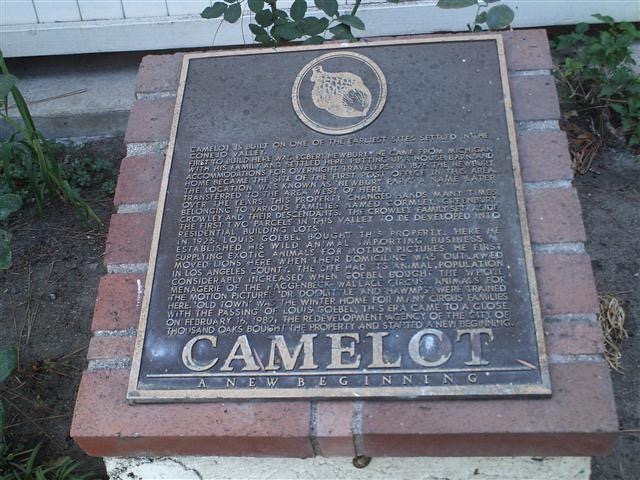
A smaller plaque is mounted near the Camelot's pool area
Here is the original brochure that explains Camelot's Acorn symbol

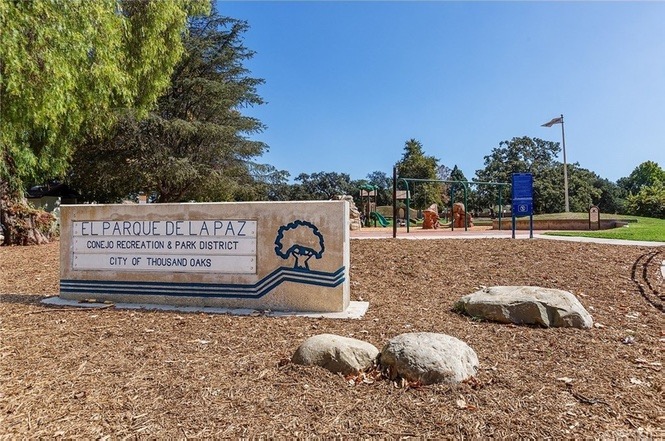
El Parque De Lapaz
The neighboring park beside Camelot that was once known as Jungleland, now El Parque de Lapaz, still stands with the memorabilia of when wild animals once roamed the park. You will still find the original white Jungleland flag standing ontop of a hill next to the playground, the Lion water fountain and statues of Camels and Elephants that give nod to the rich history that first put Thousand Oaks on the map.